

Chinese manufacture of EV charging equipment leads the world. Not only does China house the most charging points, far ahead of Europe and the US, and promise continuously increasing demand, but also, through intense competition, Chinese EV charging companies are now able to offer quality solutions with low cost in the global market.
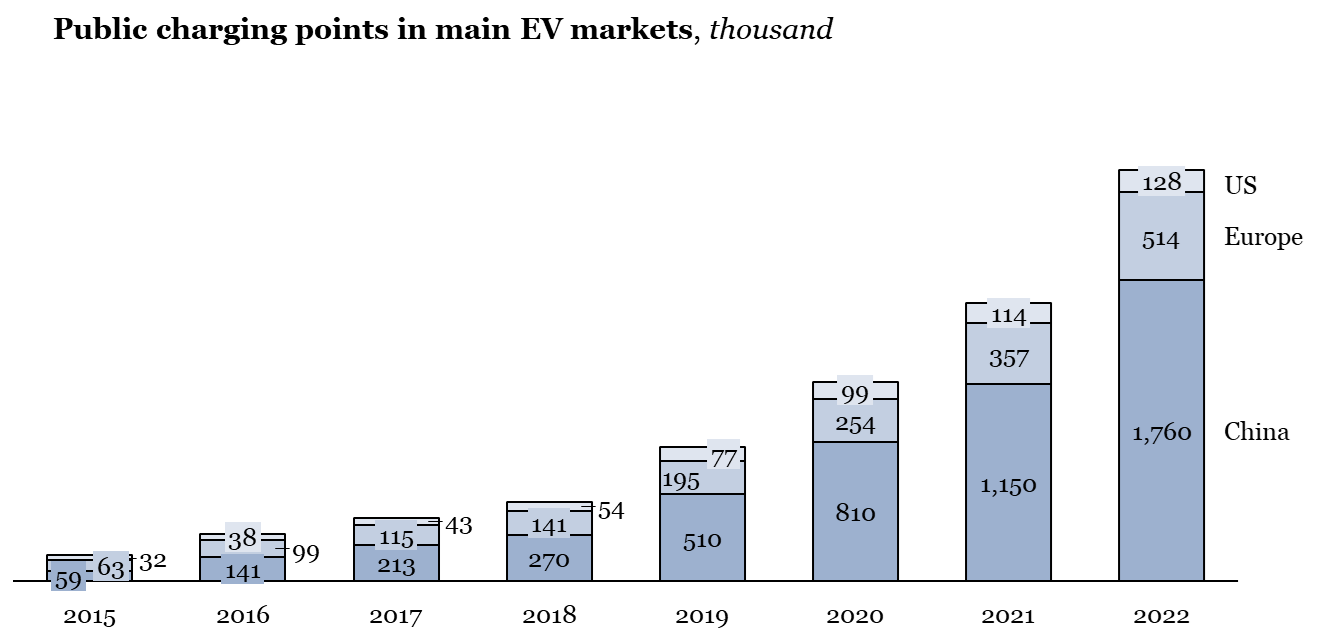
As of August 2023, there are 7.2 million charging points in operation in mainland China, of which about 4.9 million are private chargers installed for EV owners, accounting for 68%.
The rest 2.3 million are public charge points, developed rapidly with the support of favorable government policies, representing a phenomenal year-on-year growth of 40%. Among the public charging points, 963,000 are DC and 1.3 million are AC points. The faster DC chargers are becoming more prevalent. In addition, in this country with the longest total highway mileage in the world, over 29,000 car-parks along highways are now equipped with EV chargers.
The largest charge point operators (CPO) in China are TELD, Star Charge and YKC, managing 450,000, 410,000 and 380,000 points respectively, accounting for almost 55% of all public charging points. The state-owned State Grid Corporation of China operates another 200,000 points. With a large share of CPO market concentrated to these big players, most of them do not produce charging equipment in a large scale, but purchase from upstream suppliers, giving rise to a myriad of manufacturers scrambling for a piece.
These manufacturers in China can be divided into three major categories. First are those subsidiary or related to State Grid and China Southern Power Grid, the two state-owned power utility goliaths, such as Nari Technology, Guodian Nanjing Automation and XJ Electric.
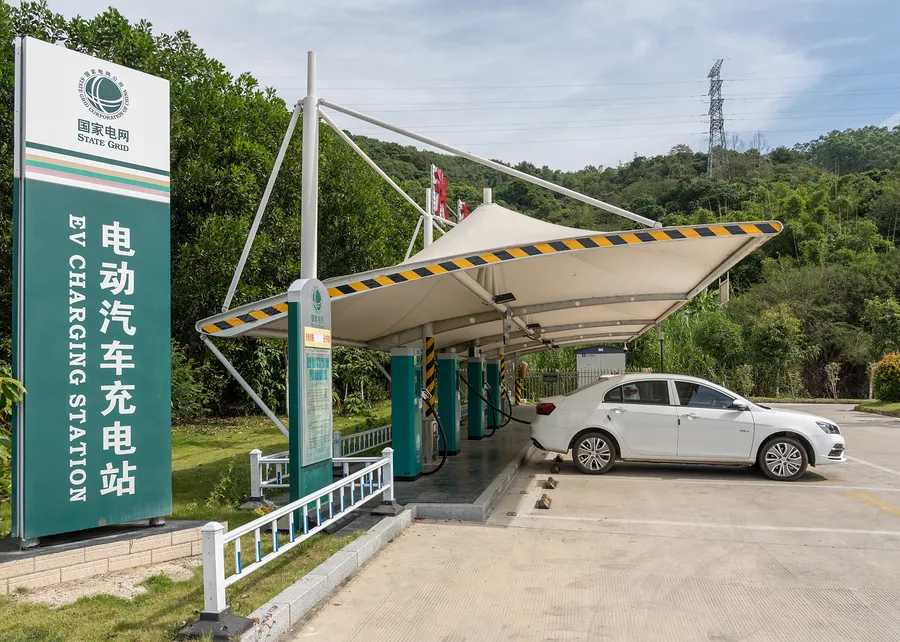
Second are private companies that both manufactures and operates charging stations at once, such as TGOOD of TELD, Wanbang of Star Charge, Potevio Shanghai and Zhejiang Wanma. These players aim to extend business along the EV charging industry chain, cover more territories, and strengthen bargaining power through integration.
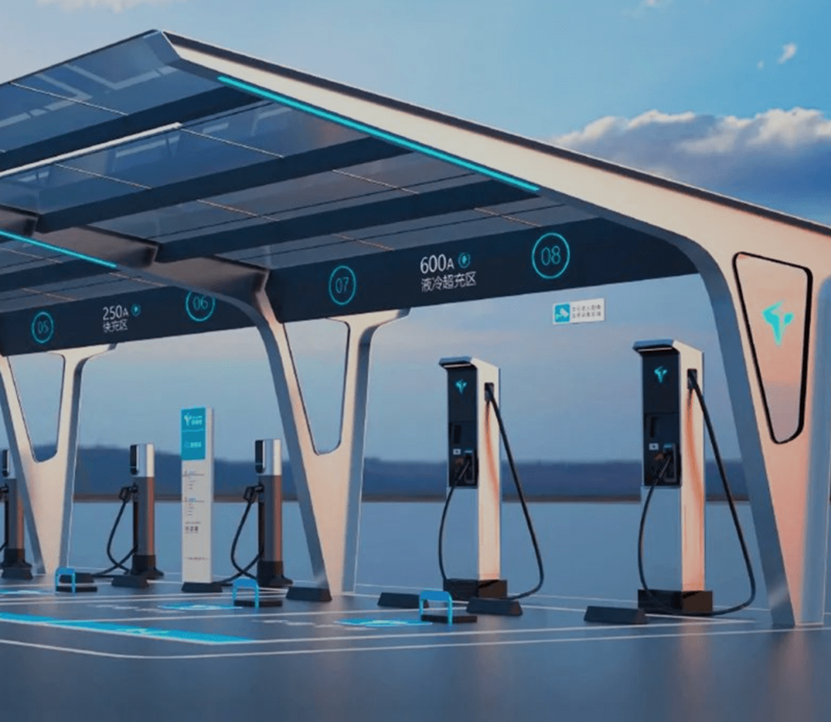
The third are those focused on charging station equipment manufacturing, such as Sinexcel, Clou, Kstar, Heshun and Zhongheng. These companies provide charging equipment and hardware, and even integrated solutions to public charging station owners.
In order to stand out with a turn-key solution, some also cover the design, planning and engineering of EV charging stations and the precedent distribution grid upgrade. Since most large-scale stations are led by the local governments and state-owned enterprises, the main players in this field are such SOEs as State Grid, China Energy Construction, and Power Construction Corporation of China, as well as their outsourcers.
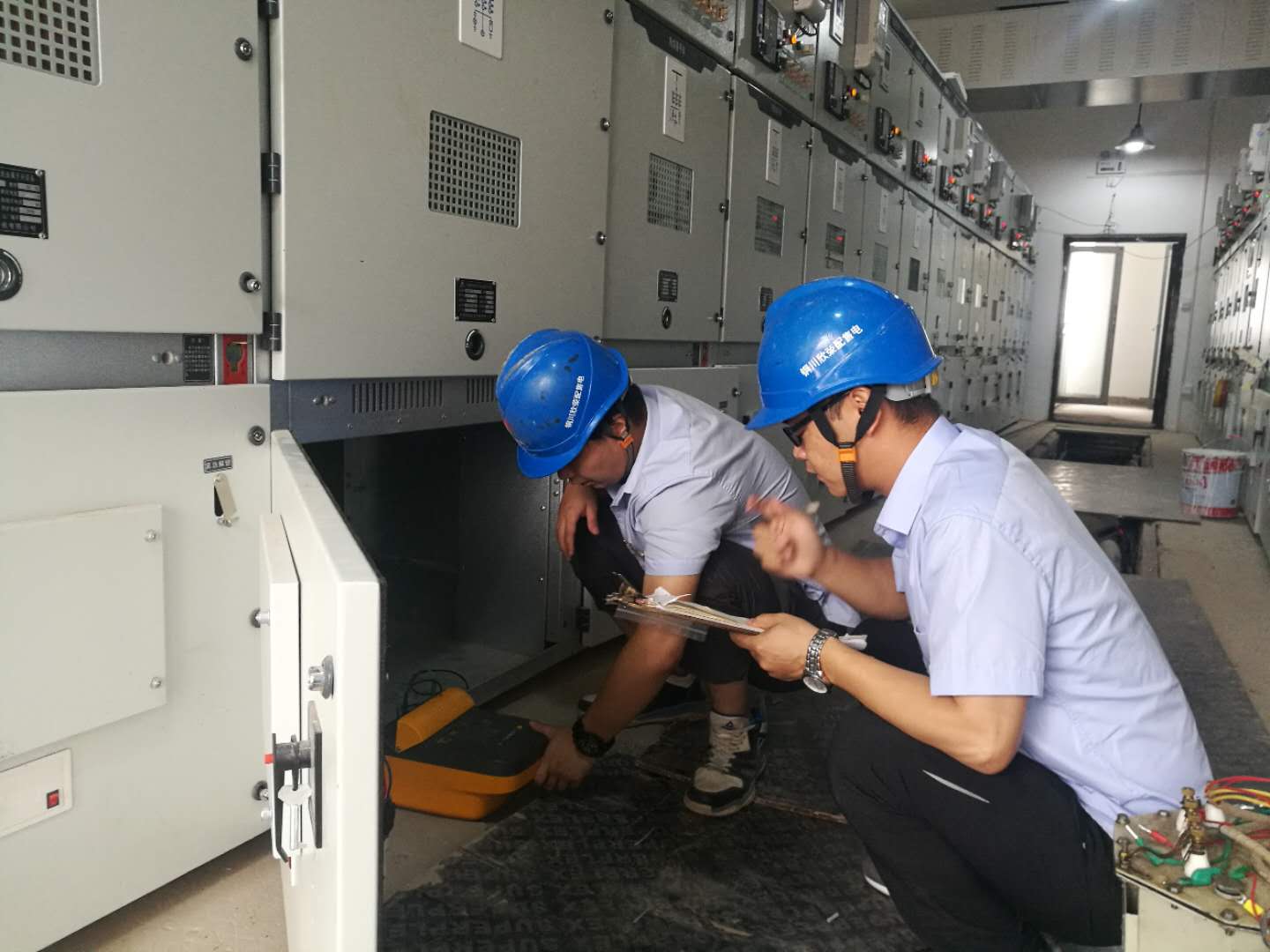
Upstream to EV charging infrastructure manufacture, are the makers of parts and components. A complete and ready-to-use charger consists of various building blocks, among which power supply and control board are viewed as core.
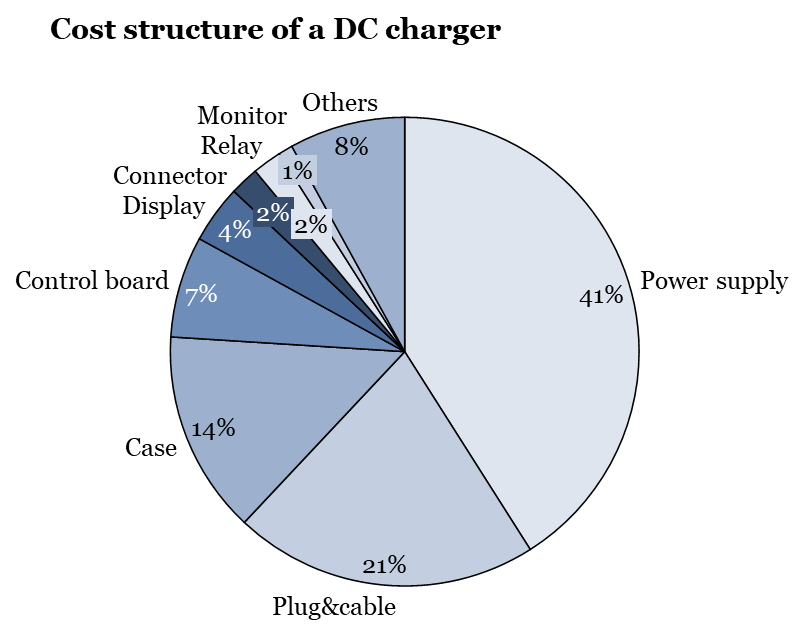
While most companies design and produce their own control board, the number of power supply manufacturers is easily countable.
The power supply functions as controller and converter of electricity. It costs about 40% of the end product. The quality of this module directly influences the overall performance and safety of a DC charging equipment. Therefore, leading power supply makers with high technical barriers have reaped obvious favors from the market. With CR5 exceeding 75% in 2022, the market appears concentrated but far from stable. In 2022, Infineon sat at the top with nearly half of the market, up from 11% in 2017, with its leading position continuing to strengthen. Other popular players include Winline, Tonhe, UUGreenPower, Increase, Sinexcel, Megmeet and so on. These past a few years have witnessed the visible fluctuation of each player’s market share, and it is conceivable that emerging manufacturers might still have opportunities to grow.
Manufacturers often directly purchase components for assembly, while some also develop and produce important components themselves, in an attempt to render cost more controllable or products more profitable. For example, Sinexcel, an EV-charging manufacturers that makes power supply in house, has seen a gross margin of 36% in 2021, up to the mark in the industry.
Overall, forged through a fast growing and highly competitive market, Chinese charging manufacturers come off well on both technology and cost. Due to the sheer size of the Chinese market, even participants with relatively small shares deliver considerable volume of mature products. Specifically, companies that can expand over the industrial chain and develop core components in house will likely have more advantage.